Fake Warhammer Books Are Flooding Online Stores
Warhammer fans are used to navigating an enormous library of novels, anthologies, audio dramas, collector’s editions and regional reprints. Unfortunately, that complicated publishing history has also created an opportunity for fake books to hide among legitimate releases.
Since late 2024, online bookstores have carried dozens of unofficial books that openly use Warhammer 40,000 terminology while presenting themselves like genuine franchise novels. Some appear to be newly created, AI-assisted knockoffs. Others are suspected counterfeit copies of real and increasingly valuable Black Library books.
These are two different problems, but both rely on the same weakness: Warhammer’s fictional universe and publishing catalogue are now so large that even experienced fans cannot immediately recognise every title, edition or author.
The Rise of Unofficial Warhammer Novels
The problem gained wider attention in March 2025, when Wargamer investigated a collection of unofficial Warhammer-style books appearing across major online retailers.
The books were published under names including Tony Bui, Uno Nguyen and Torrin Nightflare. Each name was connected to at least 20 books released during 2024, often using recognisable Warhammer factions, terminology and imagery.
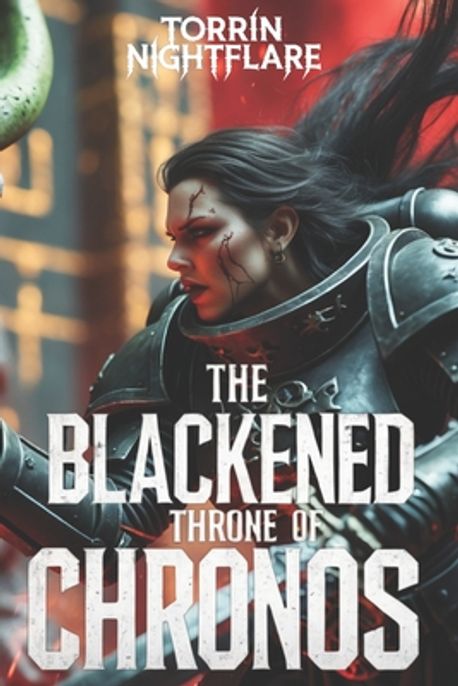
These were not official Black Library releases. They appeared to be self-published books created outside Games Workshop’s licensed publishing system, and the supposed authors had little or no verifiable public presence beyond their rapidly expanding book catalogues.
Many of the covers also displayed signs commonly associated with AI-generated artwork: strangely shaped armour, inconsistent weapons, distorted details and dramatic compositions that resembled official Warhammer art without matching any real Games Workshop release.
Amazon later removed many of the original listings. However, removing a book from one platform does not necessarily erase it from the wider book market.
Book metadata can spread through distributor databases, automated storefronts and second-hand marketplaces. As a result, listings for the same books were reportedly still appearing through retailers including AbeBooks, Waterstones, Foyles, Books-A-Million, Bookshop.org and eBay.
The Problem Continued Into 2026
The wave of questionable Warhammer-related publishing did not disappear after the first listings were removed.
In April 2026, PC Gamer reported on a 65-page Amazon release titled Taken by the Tyranid: A Romance in the Far Future. The listing used concepts that closely resembled the Sisters of Battle and the Tyranids, accompanied by what appeared to be an AI-generated cover.
The book may have been intended as parody or novelty fiction, but its existence demonstrated how easily recognisable Warhammer concepts could be repackaged and sold through mainstream publishing platforms.
The issue is therefore larger than a few suspicious novels. Cheap AI tools, print-on-demand services and automated distribution systems now allow almost anyone to create a manuscript, generate a cover, invent an author identity and place a paperback in online bookstores.
Why Warhammer Is an Easy Target
Warhammer is particularly vulnerable to fake and misleading books for several reasons.
The fictional universe is enormous
A title such as Ashes of Vengeance, Legion of Damnation or The Last Crusade can sound completely believable within the Warhammer 40,000 universe.
Warhammer titles frequently use words such as blood, darkness, betrayal, vengeance, crusade, legion, fire and ruin. A generated title can therefore resemble a real Black Library release without copying the name of an existing novel.
There are already hundreds of legitimate releases
Black Library has published novels, short-story collections, novellas, limited editions, eBooks and audio dramas across Warhammer 40,000, the Horus Heresy, Age of Sigmar and other settings.
Even dedicated readers are unlikely to remember every official title. A casual buyer, parent or relative purchasing a gift has even less chance of identifying an unfamiliar book as unofficial.
Regional and repackaged editions create confusion
Real Warhammer books sometimes appear in French, German or other regional markets before receiving wider English-language attention. Existing stories can also be repackaged into new anthologies or omnibus editions with different titles and cover artwork.
This means that an unfamiliar title is not automatically fake. Unfortunately, it also gives counterfeiters and unlicensed publishers plausible cover when introducing questionable books.
Older Black Library books can be expensive
Many physical Black Library novels are printed in limited quantities and remain unavailable for long periods. Once a book goes out of print, second-hand prices can rise dramatically.
Scarcity creates an obvious incentive for counterfeiters. A fake copy of a rare Horus Heresy novel can potentially be sold for far more than the cost of producing a basic print-on-demand paperback.
AI has reduced the cost of producing convincing listings
A professional-looking book once required an author, editor, illustrator, designer and printer. Generative tools can now produce a title, synopsis, manuscript and cover image in a matter of hours.
The result may not survive close inspection, but it can look convincing enough as a small thumbnail in an online search result.
Two Different Types of Fake Warhammer Books
It is important to separate the problem into two main categories.
1. Unlicensed AI-Style Warhammer Novels
These are entirely new books created by unofficial publishers. They are not copies of existing Black Library novels, but they use Warhammer terminology and imagery to attract customers.
Common warning signs include:
- “Warhammer 40K” placed prominently in the title or subtitle.
- Unlicensed use of names such as Space Marines, Chaos, Tyranids or the Imperium.
- An unknown author releasing an implausibly large number of books in a short period.
- Cover art containing malformed armour, weapons, lettering, faces or hands.
- No Black Library or Games Workshop publishing information.
- Generic descriptions that repeat basic Warhammer terminology without naming specific characters or events.
- Extremely short page counts presented as complete novels.
- Prose that appears repetitive, inconsistent or similar to automatically generated fan fiction.
The target customer may not be a committed Warhammer reader. These books are more likely to fool someone searching for a gift who assumes that every Warhammer-related result on a major bookstore website must be official.
2. Counterfeit Physical Editions
A separate problem involves reproductions of real Black Library books, particularly expensive or difficult-to-find Horus Heresy titles.
These books can be harder to identify because the title, author and cover artwork may all belong to a genuine release. The book itself, however, may be an unauthorised reproduction.
Collectors have reported suspicious copies with:
- A paperback format that was never officially released.
- Incorrect dimensions, thickness or page counts.
- Distorted lettering on the spine.
- Blurry or low-resolution cover artwork.
- Missing copyright, ISBN or publisher-information pages.
- Unusual paper quality or inconsistent printing.
- Incorrect prices, barcodes or publication details.
- Interior pages taken from a different book.
The Suspicious End and the Death: Volume III Paperback
One widely discussed collector report concerned The End and the Death: Volume III, the final part of Dan Abnett’s conclusion to the Siege of Terra.
A buyer reportedly ordered what appeared to be a mass-market-paperback edition through eBay. The problem was that no official mass-market edition matching the received book appeared to exist.
Photographs shared with the Black Library collector community showed distorted spine lettering, an incorrect size and no proper publisher-information page. Other readers also noted that the book’s thickness and apparent page count did not match the genuine edition.
This does not establish how widespread counterfeit Black Library printing has become. Most of the available evidence consists of individual collector reports rather than industry-wide data.
However, these reports show that physical counterfeits are possible and that buyers should be cautious when expensive books appear in unusual formats.
What Amazon’s Rules Say About AI Books
Amazon’s Kindle Direct Publishing guidelines require publishers to inform Amazon when a book contains AI-generated text, images or translations.
Amazon distinguishes between AI-generated material and AI-assisted work. Content created directly by an AI system must be disclosed, while tools used only for brainstorming, editing or error checking generally do not require the same disclosure.
KDP publishers are also responsible for ensuring that their books comply with intellectual-property rules. Misleading descriptions and content that creates a poor customer experience may also be removed.
However, these policies do not guarantee that every questionable book will be detected before publication. A suspicious title may remain available long enough for its information to spread to other retailers and second-hand sellers.
How to Check Whether a Warhammer Book Is Real
Before buying an unfamiliar Warhammer novel, especially from a third-party seller, check several details rather than relying on the storefront alone.
- Check the publisher. Official Warhammer fiction should normally be connected to Black Library or Games Workshop. Some licensed reference books, roleplaying books and comics may use other approved publishers.
- Search the exact ISBN. A genuine ISBN should lead to consistent information about the title, author, format, page count and release date.
- Verify the author. Established Black Library writers normally have identifiable publication histories and official author pages.
- Confirm that the edition exists. Check whether the book was officially released as a hardcover, trade paperback, mass-market paperback or limited edition.
- Inspect the copyright page. A physical book should contain proper publisher, copyright, printing and ISBN information.
- Compare the page count and dimensions. A rare 500-page novel should not suddenly appear as a thin 200-page paperback.
- Study the cover closely. Look for distorted lettering, blurred artwork, incorrect logos and unusual character designs.
- Be suspicious of impossible author output. An unknown writer releasing dozens of full-length Warhammer books in a single year is a major warning sign.
A listing appearing on a respected bookstore website does not automatically mean that the book is officially licensed.
Not Every Strange Warhammer Listing Is Fake
There is an important danger on the other side of this issue: genuine books may be incorrectly accused of being fake.
Retailer databases sometimes reveal titles, ISBNs and release dates before Games Workshop makes a major announcement. Foreign-language editions may also use different titles or combine stories that were previously released separately.
An unfamiliar title should therefore be investigated rather than immediately dismissed. The most reliable approach is to compare the publisher, ISBN, author, format and edition history across several sources.
Why Fake Warhammer Books Matter
These books do more than disappoint a few collectors.
Unofficial and counterfeit releases can:
- Mislead new readers about the quality of Warhammer fiction.
- Divert money away from legitimate writers, artists and publishers.
- Fill bookstore searches with unreliable results.
- Introduce invented information that may be mistaken for official lore.
- Make genuine surprise releases appear suspicious.
- Damage confidence in the second-hand Black Library market.
- Exploit parents, relatives and casual buyers searching for gifts.
A New Problem for Warhammer Collectors
Fake Warhammer books are unlikely to disappear completely. Generative tools and print-on-demand services have made it too easy to create convincing-looking products at very little cost.
For readers, the best defence is verification. Look beyond the cover. Check the publisher, ISBN, author, page count and official edition history before buying.
For collectors, especially those purchasing rare Horus Heresy books, detailed photographs of the spine, copyright page and interior printing should become a normal part of the buying process.
In the grim darkness of the far future, there may be only war—but in the modern online book market, there is also AI-generated fan fiction, misleading metadata and the occasional counterfeit paperback.
Sources and Further Reading
- Wargamer: The Warhammer 40K Community Is Under Siege by an Army of Fake AI Books
- PC Gamer: The AI Smut Peddlers Have Come for Warhammer 40,000 Now
- Amazon Kindle Direct Publishing: Content Guidelines and AI Disclosure Rules
- Black Library collector discussions concerning counterfeit Horus Heresy books


No comments:
Post a Comment